I — The Origins of Wine

The Wine Stories series was born of a wish to understand wine beyond the glass — as a symbol of civilization, memory and identity.

From the first wild grapes to the vineyards that shaped the Old World, wine has accompanied humankind on its journey across the land and through time.

Each chapter is an invitation to contemplation: a journey through the origins, rituals and transformations that made wine a universal heritage.

In this first part, we explore the origins of wine and the vine, the birth of viticulture, and the moment when humankind discovered, perhaps by chance, the power of fermentation.

Antiquity and the Civilizations of Wine

If the vine was born of chance and the instinct for survival, it was in Antiquity that wine became culture. It ceased to be merely transformed fruit and came to be integrated into systems of thought, structures of power, and organized forms of communal life.

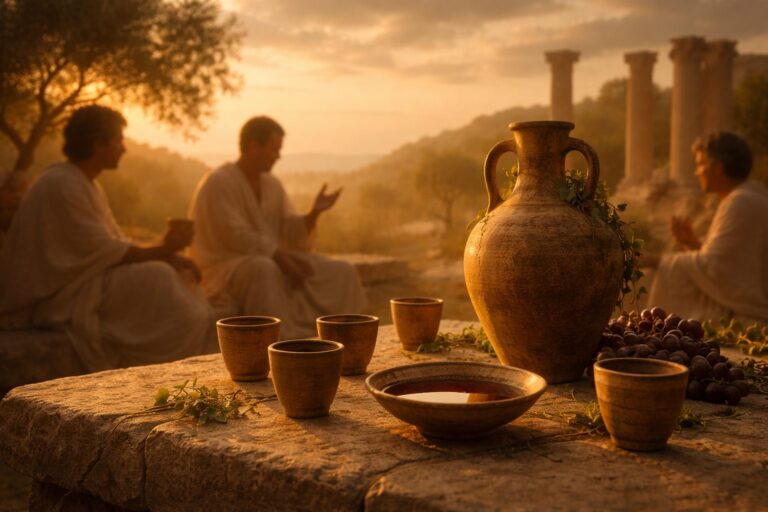
Between temples, agoras, and amphitheaters, wine assumed new meanings. It was the drink of philosophers and priests, a symbol of political authority, an instrument of hospitality, and a means of connection between the human and the divine.

Drinking wine came to follow rules, places, and moments — and in doing so, wine became a social language.

From chapter 9 onwards, we journey through the ancient Mediterranean — from Greece to Rome, from Persia to Judea — to understand how wine accompanied the building of empires, the consolidation of religions, and the birth of classical culture.

More than a beverage, wine became a shared code, an art of living, and a way of thinking about the world.

  • Chapter 1

    The First Vine

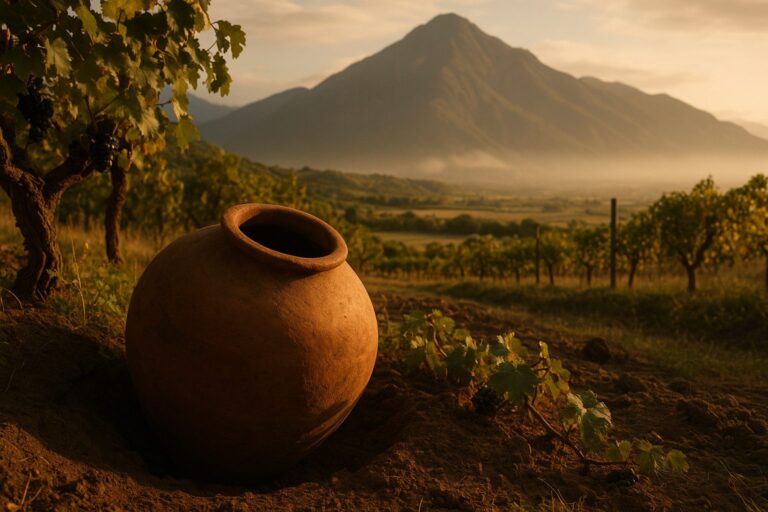
    Long before humans planted the first vineyard, the wild vine was already growing freely, spontaneously and untamed along the shores of the Mediterranean, in the forests of the Caucasus and on the sunlit slopes of Asia Minor. It was a climbing plant, winding itself around trees in search of light, with deep, flexible roots capable…
  • Chapter 2

    The Miracle of Fermentation

    Fermentation is one of nature’s greatest miracles — the spontaneous transformation of grape juice, guided by invisible organisms that turn it into wine. Long before humans understood chemistry, biology, or the role of yeast, fermentation was already working in silence, driven by the warmth of the sun and the patience of time. It was one…

  • Chapter 3

    From Chance to Cultivation

    The true civilizational leap occurred when humanity moved from chance to intention — when people stopped waiting for fruit by accident and began tending the vine, pruning it, and choosing the best places to plant it. That was the moment when nature ceased to be merely observed and began to be accompanied. The vine, which…

  • Chapter 4

    The Caucasus: The Cradle of Wine

    Between steep mountains and fertile valleys, between the Black Sea and the great Caucasus ranges, lies one of the world’s oldest cultural landscapes. It is here, in Georgia, that the story of wine gains depth and silence — and where time seems to guard, with almost ritual fidelity, the memory of the first human fermentations….

  • Chapter 8

    The First Wine Routes

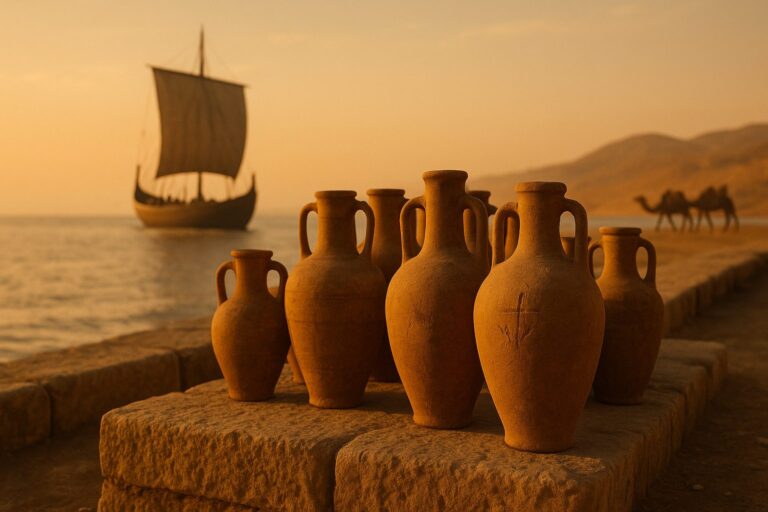
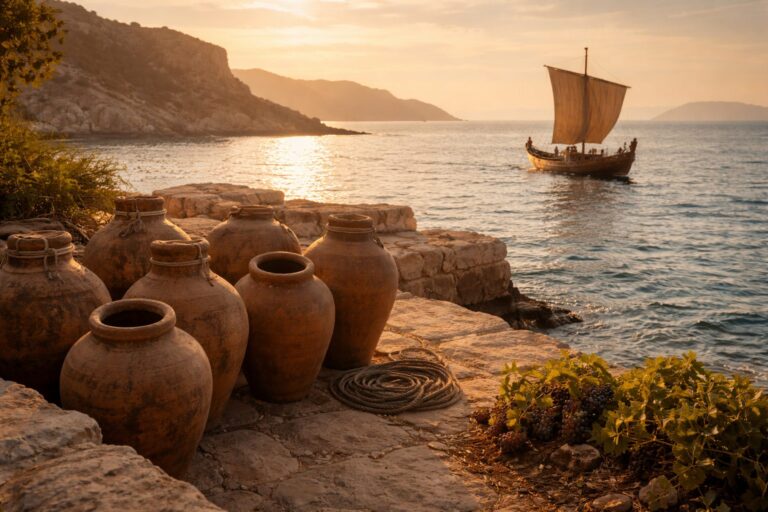
    As civilizations advanced, wine began to travel. It ceased to be merely the expression of a specific territory and became a coveted good beyond its natural borders. Clay amphorae started to move along maritime routes and land caravans, linking the East to the Mediterranean, the fertile inland valleys to coastal cities, producers to centers of…

  • Chapter 9

    The Gift of Dionysus

    In Ancient Greece, wine ceased to be merely an agricultural product and became a way of thinking about life. It was there that wine freed itself from exclusively ritual and economic functions and entered the realms of philosophy, art, and individual consciousness. Drinking was no longer just a functional or symbolic act: it became an…

  • Chapter 12

    Wine in Persia and the East

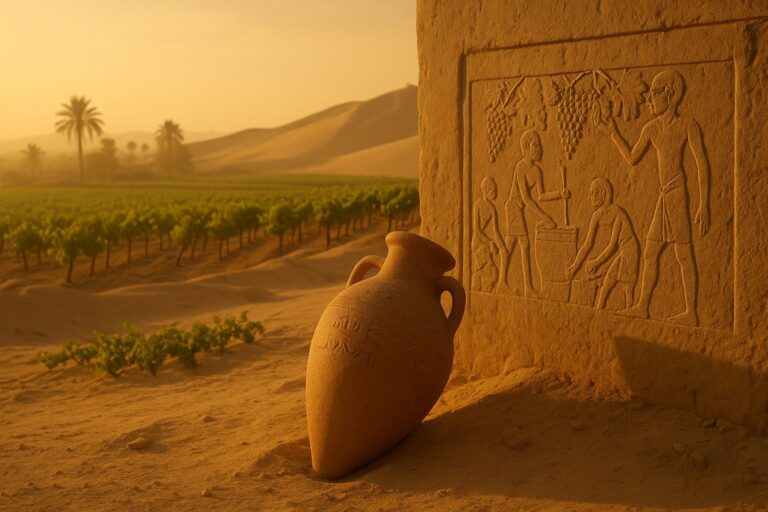
    In the vast Persian Empire, wine was enveloped in an aura of luxury, power, and knowledge. Served at the courts of kings, strategists, and sages, it was a marker of social distinction and an instrument of political conviviality. More than a drink, wine was part of a sophisticated system of material culture, irrigation, trade, and…

  • Chapter 13

    Rome: The Empire of Wine

    With Rome, wine became universal. What had until then been the privilege of regions, courts, or elites became part of the daily life of an entire empire. Wine no longer belonged only to the land where it was born; it began to accompany Roman expansion as a sign of order, belonging, and cultural integration. Roman…

  • Chapter 15

    Roman Innovations

    If Rome transformed wine into an imperial force, it was through technique that it made it durable. The Romans possessed an essential virtue: they knew how to observe, adapt, and systematize. They did not invent everything, but they perfected almost everything. In doing so, they gave wine a solid material foundation, capable of crossing distances,…

  • Chapter 16

    Wine in Ancient Religion

    In every ancient culture, wine was more than nourishment or pleasure. It was a bridge between the human and the divine. Its transformative character — fruit becoming drink, time becoming intensity — made it a privileged substance for symbolizing what transcends ordinary experience. In Dionysian cults, it represented ecstasy and revelation. In the Jewish tradition,…

  • Chapter 18

    The Vineyards of the Monks

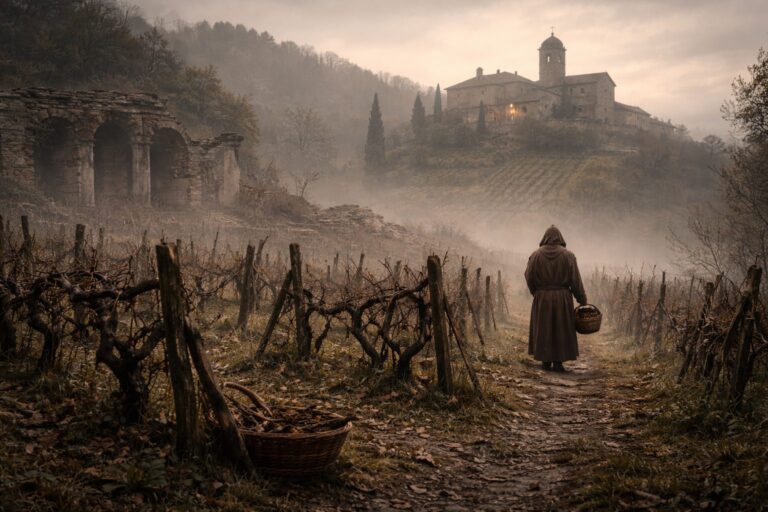
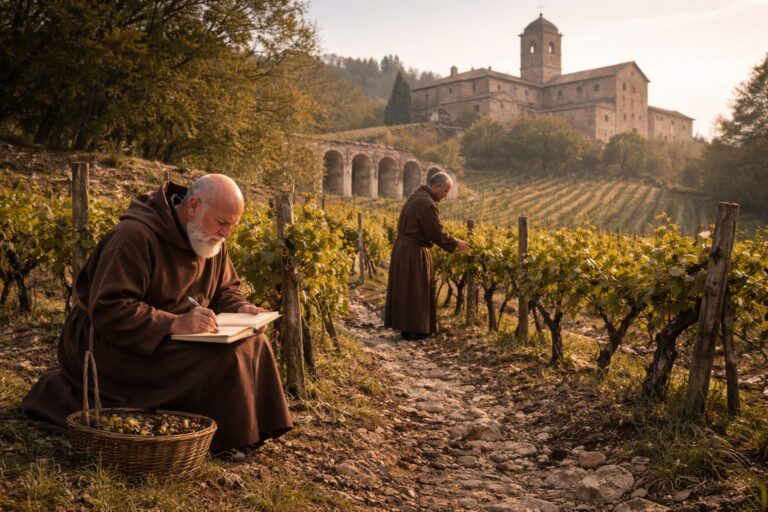
    In the centuries following the fall of Rome, as Europe searched for stability amid political fragmentation and social reorganization, monasteries became centers of continuity. Between manuscripts copied by candlelight and fields cultivated in disciplined silence, Benedictine monks — and later the Cistercians — assumed a fundamental role: they became guardians of the vine. They cultivated,…