Gordon Ramsay: Uncharted · National Geographic · Season 3, Episode 2
The day Gordon Ramsay came to the sand vineyards of Colares
In 2020 a National Geographic crew spent a day with me in the vineyards between the Atlantic and the Sintra hills. The episode aired in 2021. It is still the shortest way to explain what I do and why Colares matters.
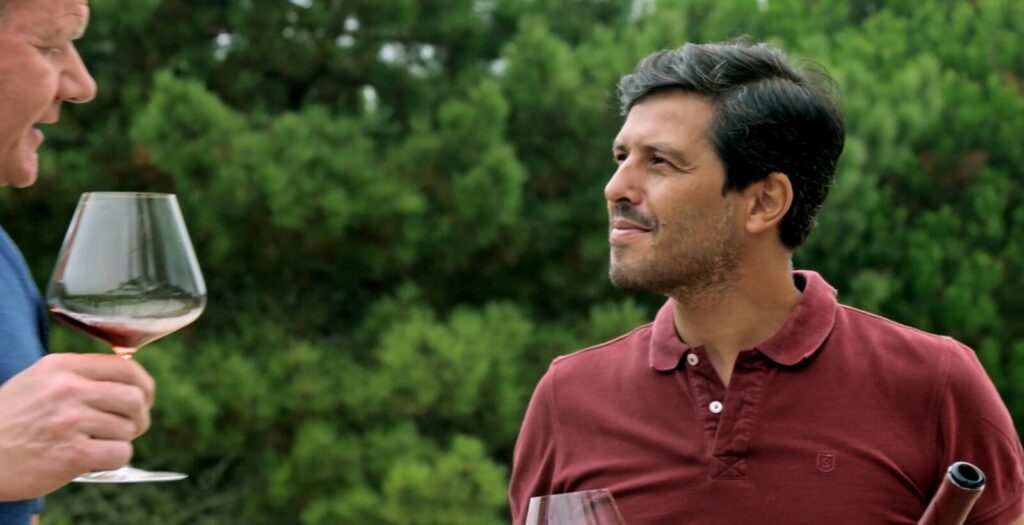
A morning in the sand
More than twenty people were already in the vineyard when I arrived: cameras, sound, a running order, and a chef who had not yet appeared. I had filmed before — a documentary series for Portuguese television in 2013 — but this was different. Colares is a small place, and what happens there rarely travels far. That morning it was about to.
Gordon Ramsay arrived the way he does everything: fast, loud, curious. Within minutes he was in the rows, asking why the vines were lying on the ground, why the soil was sand, why there were no other vineyards like this anywhere. I have answered those questions hundreds of times. I had never answered them for an audience of that size.
What he saw
Colares is the only wine region in the world where vines have always grown on their own roots in pure sand, ungrafted. The phylloxera that destroyed Europe’s vineyards in the nineteenth century cannot live in sand. So the vines here — Ramisco for the reds, Malvasia de Colares for the whites — are the same plants, on the same roots, as they were two hundred years ago.
To survive the Atlantic wind, the vines are grown low, trained along the ground and lifted onto reed supports each spring so the bunches hang clear of the sand. Ramsay helped lift them, alongside the grower who has done it every year of his life. He also learned why the wines taste the way they do: cold ocean air, salt, sand, and grapes that ripen slowly and late.
What he said
In the episode he introduced me as “the man responsible for making one of the most unique wines on the planet”, and admitted he had never seen grapes embedded in sand. I remember the tasting of the 2009 Ramisco more than the filming: the pause, the second sip, and then the comparison: “It tastes like one of the most expensive Burgundies anywhere on the planet.” Of the wine and the vineyard he said: “That, for me, is one of the best-kept secrets in Portugal.”
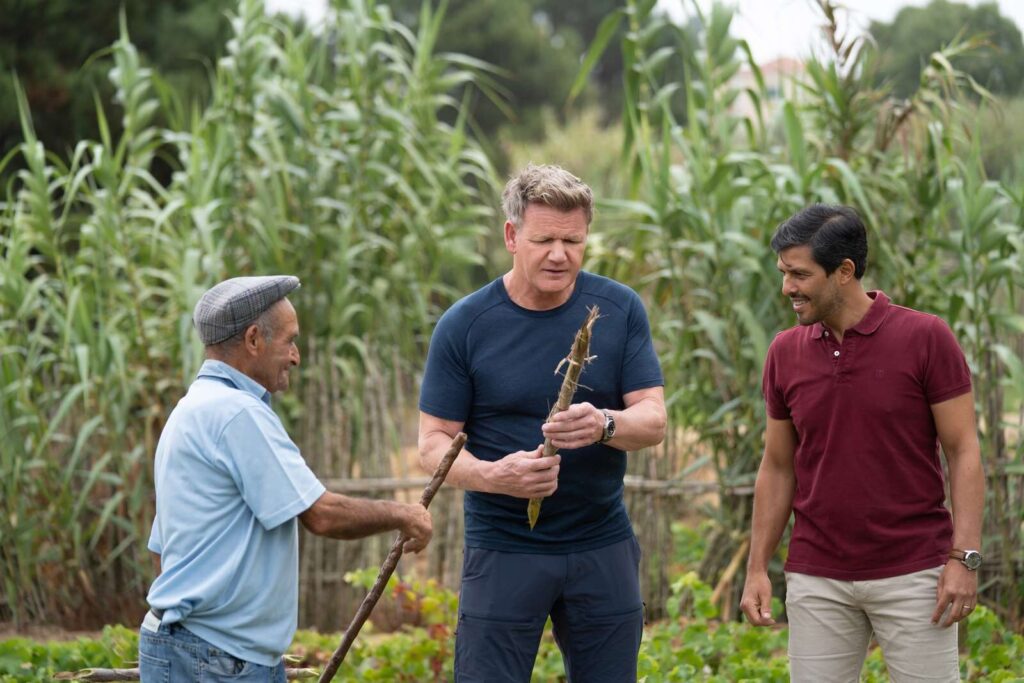
What happened next
When I made my first Colares, in the 2008 harvest, many vineyards were abandoned and few people remembered what the wines could be. The episode did in an evening what years of visits with journalists had done slowly: it put Colares back on the international map. Enquiries for visits multiplied. Growers who had let their plots go started tending them again. The wines are on lists in Lisbon and have reached London and New York.
The vines Ramsay walked are the ones behind my Colares wines — and, when the first wine carries my own name on the label, it will come from these rows: by hand, in sand, without a single graft.
See it, taste it
- The wines — the Colares of Casca Wines, Ramisco and Malvasia. Fine Wines at Casca →
- The vineyard — visits to the same rows, with tasting, organised by Casca Wines. I join when I can. Enotourism →