Wine Stories · Part II · Chapter 29
France: The Homeland of Wine — Where the Soil Finds Its Voice
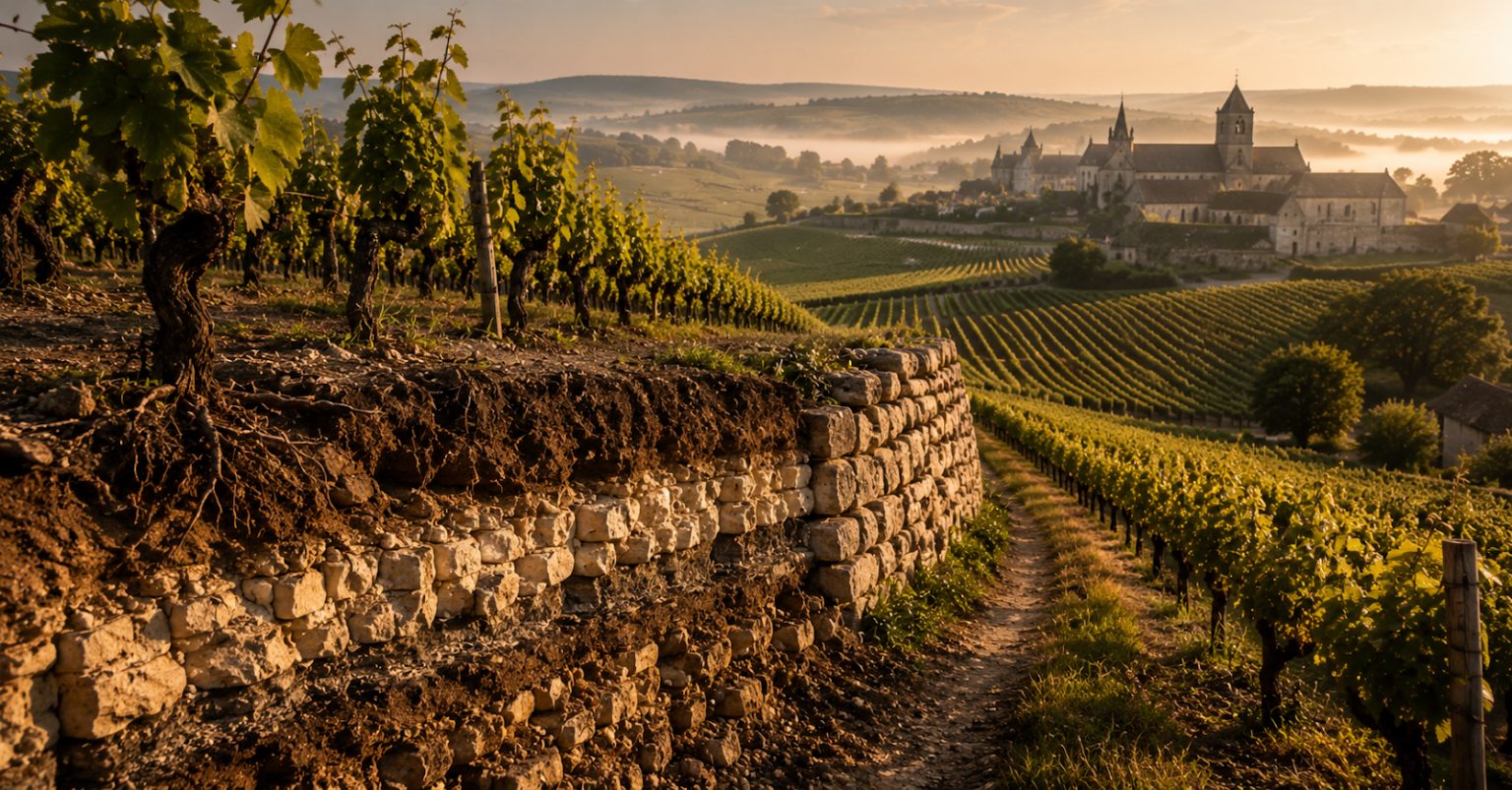
In France, wine was never merely agriculture. It became a language — shaped by soils, climates, villages, hillsides, and centuries of patient observation. A language in which every vineyard carries the history of a specific place and the memory of a long relationship between man and land.
From Alsace to Burgundy, from the Loire to Bordeaux, French wine consolidated an idea that would forever change the history of wine: that every territory possesses an unrepeatable identity, and that wine is its most faithful expression.
In this edition, we explore the birth of the French idea of terroir and how it shaped modern thinking about wine.
═════════════════════════════════════════════
Far Beyond Tradition
All great wine-producing countries have tradition. But France did something different: it transformed tradition into a cultural system.
French wine is not defined solely by quality. It is defined by the way it organizes territory, interprets landscape, and values origin. While in other regions wine was often defined by grape variety or technique, in France it began to be defined by place.
That difference, seemingly subtle, profoundly changed the way the world would come to understand wine.
═════════════════════════════════════════════
The Birth of Terroir
The word terroir has become one of the most widely used — and also most misunderstood — terms in the wine world.
It is often reduced to soil, but the French idea is far broader. It includes geology, climate, altitude, sun exposure, humidity, human tradition, agricultural practices, and collective memory.
Terroir is not merely nature. It is nature interpreted over time. And it was in France that this interpretation achieved full awareness.
═════════════════════════════════════════════
Burgundy and the Precision of Place
In Burgundy, this vision perhaps reached its purest form.
The Cistercian monks had already identified subtle differences between neighboring parcels, but over the following centuries those differences came to be understood as distinct identities.
A slight change in slope could alter the profile of the wine. More limestone-rich soils brought greater tension and minerality. A more sheltered parcel produced wines of greater delicacy.
Each vineyard began to be viewed almost as an individual.
In Burgundy, wine does not merely represent a region — it represents an exact fragment of territory.
═════════════════════════════════════════════
Alsace: Wine as Cultural Landscape
In Alsace, the relationship between wine and territory took on another dimension.
The vineyards stretch along the slopes protected by the Vosges Mountains, benefiting from one of the driest climates in France. The villages, soils, and grape varieties together created an identity deeply tied to the landscape.
Alsatian wine became a visual and cultural expression of the territory — the tall bottles, the village names, the strong gastronomic connection.
Everything contributed to consolidating an identity in which terroir was not merely agricultural. It was cultural.
═════════════════════════════════════════════
Bordeaux and the Power of Reputation
Bordeaux followed a different path.
While Burgundy refined territorial detail, Bordeaux developed a broader logic of reputation and trade. There, terroir also became associated with aging potential, consistency, and international prestige.
The great châteaux established themselves as references, and wine came to represent not only soil, but also structure, continuity, and economic power.
Bordeaux demonstrated that terroir could be organized at scale.
═════════════════════════════════════════════
The Soil Finds Its Voice
France’s great contribution was this: giving voice to the soil.
Before this, wine was often understood through production or commerce. In France, territory itself began to speak. Soil ceased to be invisible — it began to be interpreted, valued, and protected.
Every wine became a geographical narrative.
═════════════════════════════════════════════
The Vineyard as Collective Identity
As this vision became consolidated, wine ceased to belong solely to the individual producer and began to represent entire communities.
A village could become known for its wine. A hillside could become cultural heritage. A region could build its reputation over centuries.
Wine was transformed into collective identity.
═════════════════════════════════════════════
Terroir as Resistance to Uniformity
The idea of terroir also brought an important consequence: resistance to uniformity.
In a world where trade tended to standardize products, the French model asserted precisely the opposite — difference is value.
Every place should express itself in its own way, and every wine should carry the marks of its origin.
This principle would become one of the philosophical foundations of European wine.
═════════════════════════════════════════════
The Role of Time
Terroir is not born in a single year. It is built slowly.
Agricultural practices accumulate, choices are repeated, generations learn from the past.
In France, time became an essential part of wine identity.
Terroir is not only space — it is also memory.
═════════════════════════════════════════════
Between Nature and Interpretation
It is important to understand something fundamental: terroir does not exist alone.
The land offers potential, but man interprets it. The choice of grape variety, pruning method, harvest timing, vinification — all influence the final expression.
The French model never fully separated nature from human intervention. It sought balance between the two.
═════════════════════════════════════════════
Wine as Cultural Expression
By consolidating the idea of terroir, France transformed wine into a sophisticated cultural form — landscape, gastronomy, regional identity, historical heritage, and social language.
No other country integrated these dimensions with such depth.
═════════════════════════════════════════════
The Impact on the World
Over time, this vision crossed borders.
Other countries adopted similar concepts, and modern appellation systems were directly inspired by the French model.
Even New World regions, initially more focused on grape variety and technique, gradually began speaking about terroir.
France did not export only wine. It exported a way of thinking about wine.
═════════════════════════════════════════════
The Winemaker Before Terroir
As a winemaker, this question remains central.
To what extent do we guide the wine — and to what extent do we allow the place to speak?
Terroir demands humility. It requires the ability to listen to the vineyard before imposing style.
Perhaps that is the greatest French lesson.
═════════════════════════════════════════════
When Place Becomes Signature
France’s greatest contribution was transforming territory into signature.
Wine acquired an accent, carrying the identity of place in a recognizable way.
And it was at that moment that the soil found its voice — a voice that still defines much of what we understand today as great wine.
═════════════════════════════════════════════